
Q. The normal resting membrane potential of ventricular myocardium is
a. 85 to 90 mV
b. -85 to -90 mV
c. 70 to 80 mV
d. -70 to -80 mV
e. -30 to -40 mV
A. b. -85 to -90 mV
The resting membrane potential is corresponds to stage 4 of cardiac myocyte contraction. It is primarily due K+ channels. The resting membrane potential corresponds to diastole in cardiac contraction, and the normal potential is between -85 to -90 mV. When the myocyte is stimulated during the resting membrane potential, it results in influx of Na+ ions and the start of contraction.
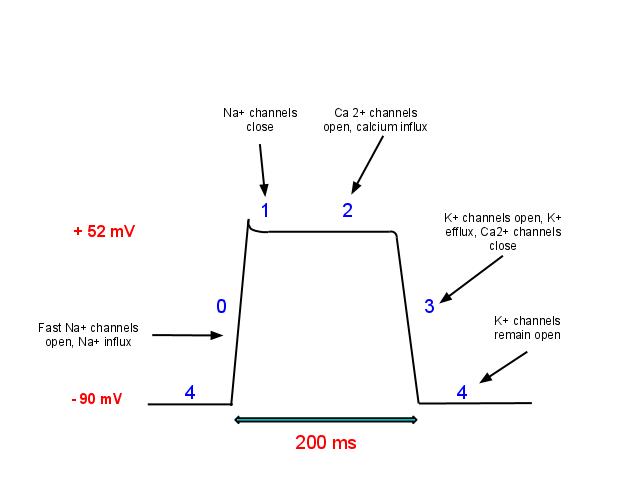
As is seen in the above image, the cardiac action potential consists of 5 stage, beginning with phase 4 all the way back to phase 4.
Phase 4 - corresponds to resting membrane potential. K+ channels are open, and an electrolyte balance is achieved to maintain the potential between -85 to -95 mV
Phase 0 - This corresponds to the start of the action potential, and is due to rapid influx of Na+ ions and a rise in membrane potential. In essence, this is the depolarisation phase.
Phase 1 - The Na+ channels close, and the membrane potential reaches a plateau.
Phase 2 - The L-type Ca2+ channels open and calcium influx occurs. Outward movement of K+ starts in this phase.
Phase 3 - The Ca2+ channels close, and K+ efflux continues. This is the relaxation / repolarisation phase of the myocyte action potential.
For more questions like these, including various aspects of Cardiology for the MRCP part 1 exam, go to www.cardio4mrcp.com or click here.
a. 85 to 90 mV
b. -85 to -90 mV
c. 70 to 80 mV
d. -70 to -80 mV
e. -30 to -40 mV
A. b. -85 to -90 mV
The resting membrane potential is corresponds to stage 4 of cardiac myocyte contraction. It is primarily due K+ channels. The resting membrane potential corresponds to diastole in cardiac contraction, and the normal potential is between -85 to -90 mV. When the myocyte is stimulated during the resting membrane potential, it results in influx of Na+ ions and the start of contraction.
As is seen in the above image, the cardiac action potential consists of 5 stage, beginning with phase 4 all the way back to phase 4.
Phase 4 - corresponds to resting membrane potential. K+ channels are open, and an electrolyte balance is achieved to maintain the potential between -85 to -95 mV
Phase 0 - This corresponds to the start of the action potential, and is due to rapid influx of Na+ ions and a rise in membrane potential. In essence, this is the depolarisation phase.
Phase 1 - The Na+ channels close, and the membrane potential reaches a plateau.
Phase 2 - The L-type Ca2+ channels open and calcium influx occurs. Outward movement of K+ starts in this phase.
Phase 3 - The Ca2+ channels close, and K+ efflux continues. This is the relaxation / repolarisation phase of the myocyte action potential.
For more questions like these, including various aspects of Cardiology for the MRCP part 1 exam, go to www.cardio4mrcp.com or click here.
